


 EN

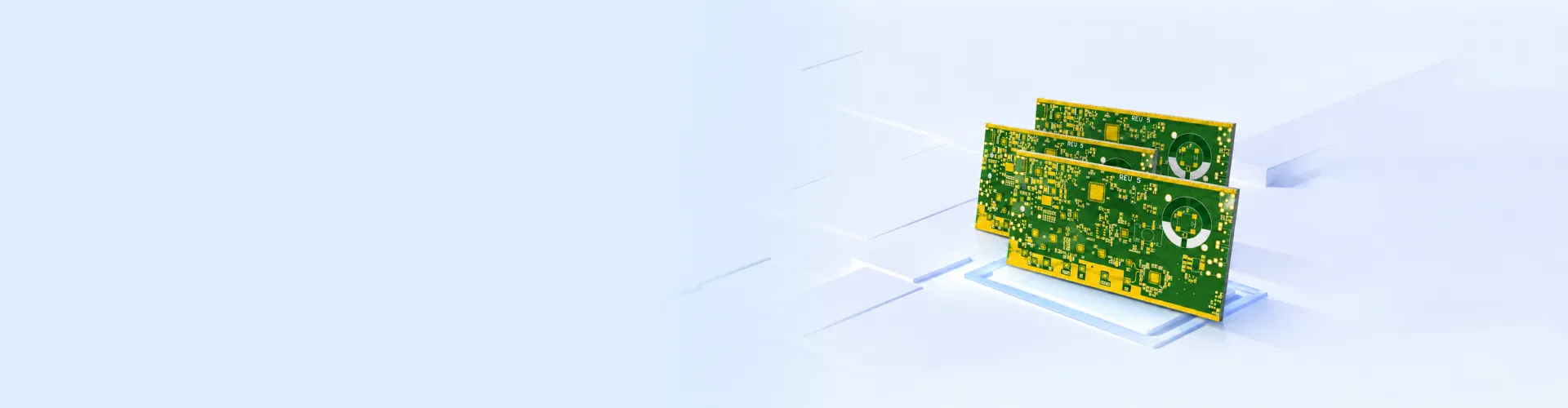
Material for PCBS
Material for PCBS
FR-4
FR4 is a glass-reinforced epoxy laminate widely used as the base material for printed circuit boards. It is made by impregnating woven glass fiber with epoxy resin and pressing the layers together under controlled heat and pressure. Known for its excellent mechanical strength, and moisture resistance, FR-4 material provides a stable base for copper layers and ensures consistent signal performance. Standard FR4 is commonly used for general-purpose PCB fabrication, while higher-Tg grades are often selected for applications that require greater thermal stability, particularly in multilayer boards and lead-free assembly processes.
HDI PCB
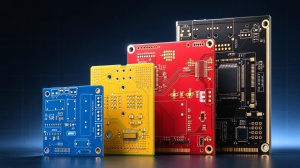
An HDI PCB (High-Density Interconnect) is a board with higher wiring density than a conventional multilayer PCB. It uses laser-drilled microvias, blind and buried vias, and finer lines and spaces — typically ≤100 μm traces and microvias under 150 μm — instead of relying only on mechanically drilled through-holes.
Flexible PCB
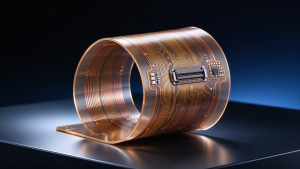
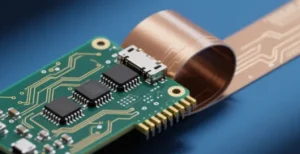
A Flexible PCB (Flex PCB / FPC) is a printed circuit board made with flexible polyimide substrates that can bend, fold, and twist without breaking. Unlike traditional rigid boards, it enables ultra-thin, lightweight, and three-dimensional designs that fit into tight spaces or moving parts.
Rigid-Flex PCB
A rigid-flex PCB combines rigid and flexible circuit layers into a single structure, offering both durability and design flexibility. It allows 3D configurations, reduces connectors, and improves reliability. AIVON's rigid-flex PCBs are ideal for compact, high-performance devices requiring stable signal integrity and mechanical strength.
Aluminum PCB
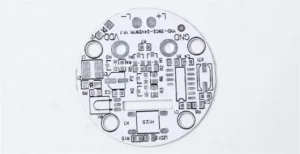
Aluminum PCB is a cost-effective heat dissipation circuit board constructed with high-purity aluminum (≥99.6%) as the thermal substrate, combined with low thermal resistance insulating media (thermal silicone gel, aluminum oxide ceramics, or modified epoxy resin) and conductive copper foil. Through an integrated design featuring rapid heat conduction via the aluminum core layer and electrical isolation via the insulating layer, it effectively addresses heat dissipation challenges for medium-power devices. It serves as the mainstream thermal substrate in fields such as LED lighting, power electronics, and automotive electronics.
Copper Core PCB
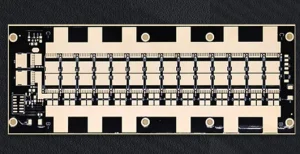
A copper base PCB is a high-thermal-conductivity circuit board that uses high-purity electrolytic copper (≥99.9%) as the core heat-conducting layer, combined with low-thermal-resistance insulating materials such as aluminum nitride ceramic, modified epoxy resin, or polyimide, and conductive copper foil. Through a dual design of direct heat conduction via the copper core and electrical isolation by the insulating layer, it effectively solves the heat dissipation challenges of high-power components, making it an ideal substrate for electronic devices with high power density and operation in high-temperature environments.
Rogers PCB
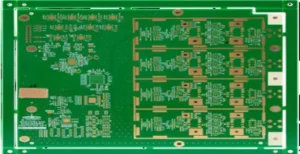
Rogers PCBs are printed circuit boards made from high-performance materials produced by Rogers Corporation. They represent a major breakthrough in high-frequency PCB technology for global wired and wireless communication products, delivering exceptional performance. Their main application areas include high-frequency PCBs, wireless base station PCBs, aerospace and defense, automotive electronics, and high-frequency or high-speed electronic devices.