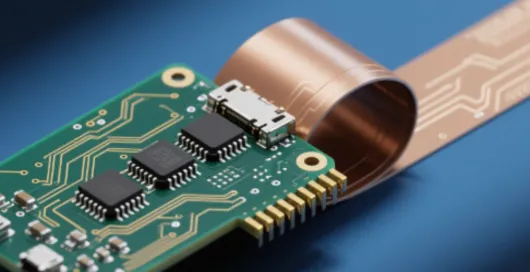
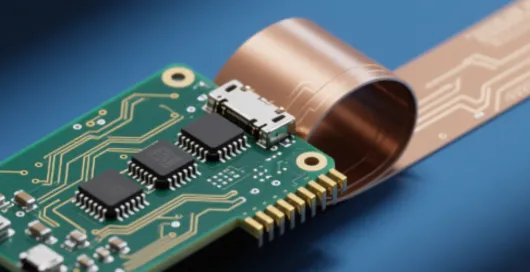
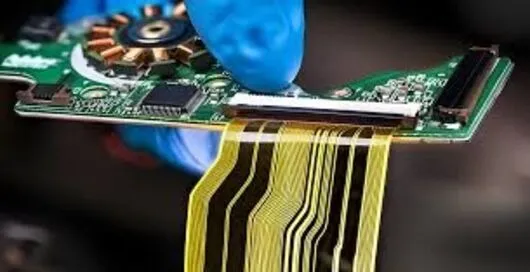
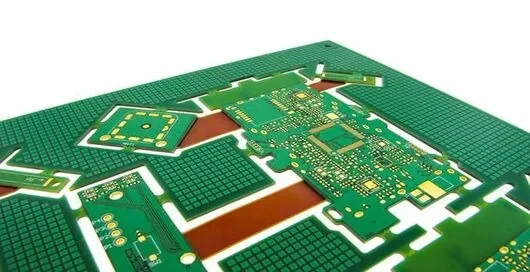
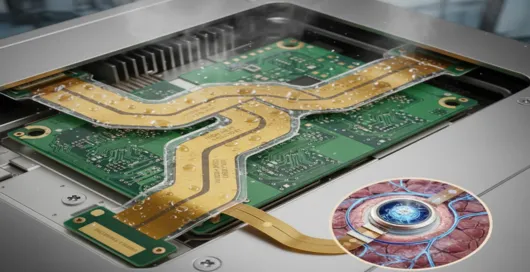
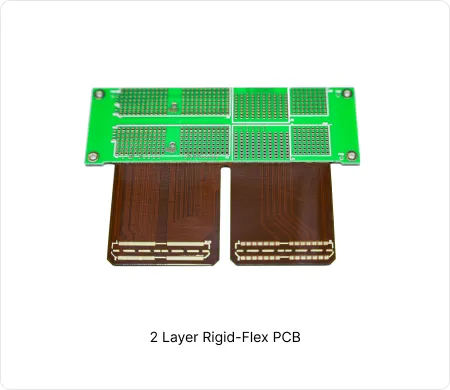
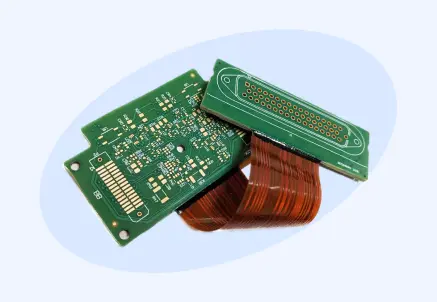
The flexible section of a flex or rigid-flex PCB can be bent, folded, or routed in three
dimensions, allowing designers to bypass internal mechanical obstructions and densely
packed components. This capability significantly improves internal layout efficiency and
reduces the overall product size. For example, in consumer electronics such as
smartphones and tablets, using flexible circuits in hinge areas, battery connections,
and display modules can reduce device thickness by up to 30%, enabling sleeker and more
compact designs. In wearables, flexible PCBs allow electronics to conform to curved
surfaces, maximizing space without sacrificing performance.
lexible PCBs enhance system reliability by minimizing the number of solder joints,
connectors, and wiring harnesses—common failure points in traditional assemblies. Fewer
interconnects can reduce the failure rate by up to 50% during long-term operation.
Additionally, the integrated structure of flexible circuits provides strong resistance
to vibration, impact, and thermal cycling. These advantages make them highly suitable
for automotive-grade applications such as in-vehicle sensors, ADAS cameras, dashboard
modules, and engine-bay electronic control units, where durability and stability are
critical under harsh operating conditions.
Fine-pitch traces in the flexible area, often with line width/spacing ≤ 0.1 mm, help
minimize signal attenuation and electromagnetic interference. Combined with advanced
stack-up design and high-performance materials, flexible PCBs can achieve ±7% impedance
control accuracy, ensuring stable signal transmission even at very high frequencies.
These characteristics make them ideal for 5G communication infrastructure, high-speed
data transmission modules, RF antennas, camera signal lines, and other applications
requiring low loss and high-frequency reliability.
Flexible PCBs typically use polyimide (PI) substrates, offering exceptional thermal and
chemical resistance. PI materials withstand temperatures above 260°C, maintain excellent
dimensional stability, and resist corrosion from oils, solvents, and industrial
chemicals. When combined with protective surface treatments, such as conformal coatings
for dustproof, moisture-proof, and oxidation resistance, flex circuits can reliably
operate in harsh environments. They are widely applied in industrial automation
equipment (e.g., robots, SMT equipment, high-temperature workshops), aerospace systems,
medical implantables, and other devices requiring long-term performance in challenging
conditions.